
We use analytics and advertising tools by default. You can update this anytime.
.11.33_PM.png&w=3840&q=75)
Rhea Purohit focuses on research-driven storytelling in tech. She writes about the psychology and history of adopting new technologies.
Creativity isn’t magic. You can train it like a muscle, and AI can help.
Apr 14, 2025 · 7 min readUpdated Jul 1, 2026
Was this newsletter forwarded to you? Sign up to get it in your inbox.
Finding creative inspiration has always mattered, but lately, it feels more important than ever. As AI takes on routine, repetitive tasks, what stands out isn’t execution—it’s originality. Waiting (or walking) around for new ideas to materialize felt arbitrary to me, so I scoured the internet looking for a more structured approach to creativity. What I found changed how I approach creative thinking.
After reading a few papers about whether LLMs can be creative, I discovered the work of Margaret Boden, a cognitive scientist who broke creativity down into specific mental processes in the 1990s. Boden is intriguing because she treats the mind—even its most imaginative abilities—as an information-processing system that follows rules, much like a computer program, rather than something mysterious and unpredictable. Her study of creativity is grounded in a practical, systematic understanding of how ideas form, far more reassuring than my sixth stroll (read: frenetic walk) around the block.
Boden’s structured view of creativity helped me see the fears about LLMs ending human creativity in a new light. Her framework allowed me to understand my own creative process—something I’d long treated as a flighty, fragile feeling—as a system I could work with. This shift brought with it a sense of security, and the realization that AI isn’t a creative competitor—it’s an ally. I found ways to use LLMs to train creativity like a muscle, something I could strengthen with practice, not just desperately hope would show up.
Applying Boden’s theory to LLMs has reshaped the way I think creatively—it might do the same for you. Let’s dive in.
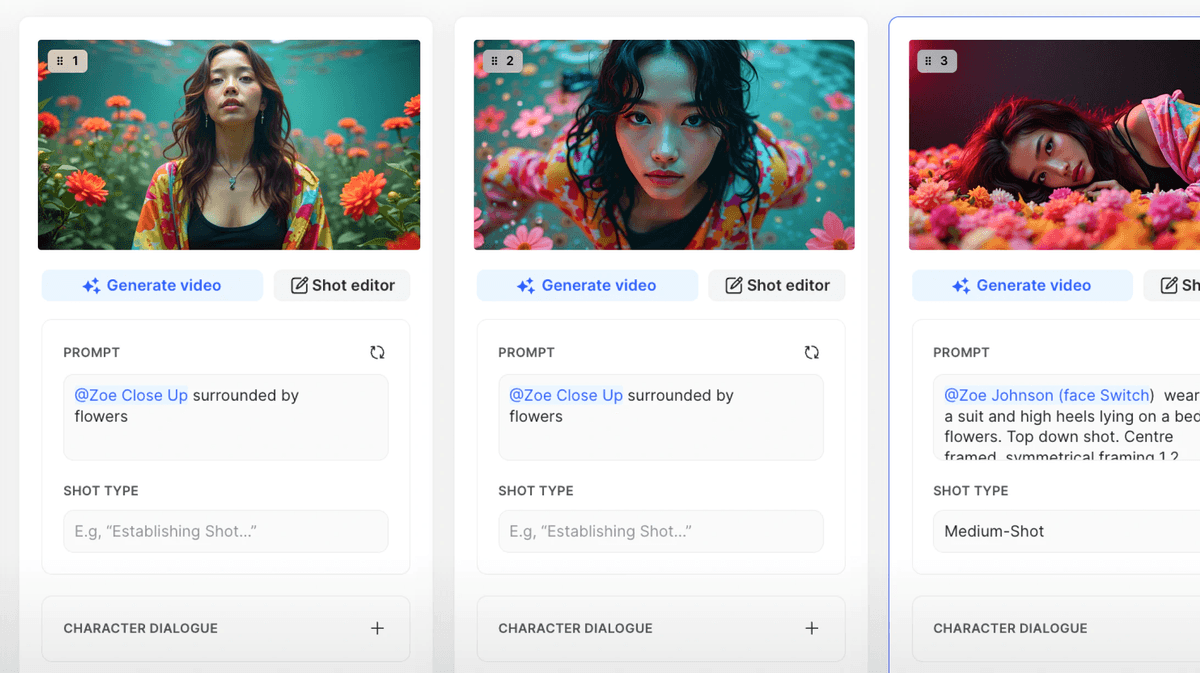
LTX Studio is an AI-powered co-pilot transforming advertising pitches and creative concepts into fully realized, multi-shot narratives with unprecedented control. Experience:
Elevate your film, advertising, and digital media production with LTX Studio.
Too many artists, scientists, and writers talk about their creative process as a blackbox—an ephemeral spark that’s difficult to explain and impossible to predict. But it’s not. Boden is one of the most influential cognitive scientists to think about creativity through a computational lens. Her work is rooted in the study of early AI attempts to recreate human creativity, like computer programs that could draw, tell jokes, or compose music.
In her 2003 book The Creative Mind, Boden described creativity as the ability to come up with ideas that are new, surprising, and valuable. She also classified creativity, dividing it into three types—combinatorial, exploratory, and transformational.
Become a paid subscriber to Every to unlock the rest of this piece and learn about:

LTX Studio is an AI-powered co-pilot transforming advertising pitches and creative concepts into fully realized, multi-shot narratives with unprecedented control. Experience:
Elevate your film, advertising, and digital media production with LTX Studio.
 Create a free account to continue reading
The essential toolkit for those shaping the future

"This might be the best value you
can get from an AI subscription."
- Jay S.
 Every Content
 AI&I Podcast


 Monologue
 Cora
Cora Sparkle
 Spiral
Join 100,000+ leaders, builders, and innovators

Already have an account? Sign in.
Daily insights from AI pioneers + early access to powerful AI tools



 Front-row access to the future of AI
 In-depth reviews of new models on release dayPlaybooks and guides for putting AI to workPrompts and use cases for buildersIn-depth reviews of new models on release dayPlaybooks and guides for putting AI to workPrompts and use cases for builders
 Bundle of AI software


 Katie Parrott
 Every Staff



 Kieran Klaassen
Comments